Moreton Bay’s Lost Reefs: Coral Became Concrete (1930 - 1997)
- Breannah Mitchell
- Feb 27
- 5 min read

When you start to dig a little deeper into Australia’s coral history, you can’t help but pause and ask: why were beautiful coral reef systems taken and turned into concrete?
Modern scuba diving and recreational snorkelling only began gaining popularity in the late 1940s and early 1950s. At the time, public awareness of coral reefs as fragile, living ecosystems was limited, and their ecological value was poorly understood.
In this blog, you will learn about the Queensland Cement and Lime Company’s destruction of Moreton Bay’s coral reefs to manufacture concrete, as well as where coral reefs are located in Moreton Bay today. Stayed tuned for part two!

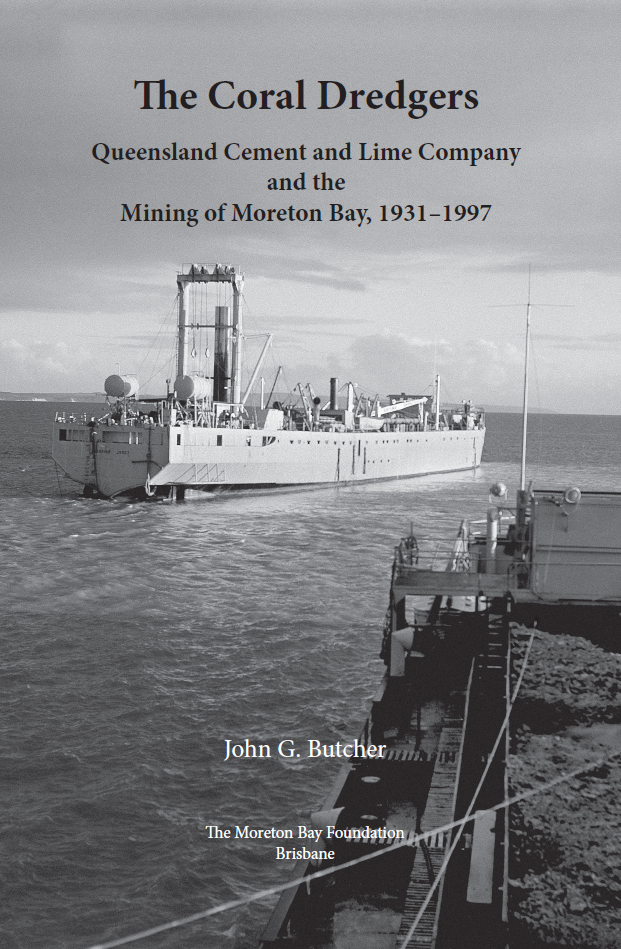
From the 1930s until 1997, the Queensland Cement and Lime Company (QCL) dredged coral from Moreton Bay—primarily around Mud Island and St Helena Island—to produce cement at its Darra plant.
Used as a calcium source, this coral helped build much of Brisbane’s major infrastructure, including City Hall, the Gateway Bridge, and Somerset Dam. The extracted coral supplied nearly sixty years’ worth of material for constructing dams, bridges, and many historic buildings still standing in Brisbane today.

The dredging was so intensive that it removed significant portions of Moreton Bay’s coral reefs. Growing environmental concern over this damage, ultimately led to the cessation of the practice in 1997.

Dead Coral Can Help Create New Reefs
Dead coral skeletons, often referred to as coral rubble, can play an important role in the formation of new coral reefs. These skeletons provide a stable calcium carbonate foundation onto which coral larvae can settle and attach, promoting the growth of new coral colonies.
Crustose coralline algae plays a crucial role in this process by cementing the dead coral rubble together, creating a stable base that supports long-term coral reef regeneration. Crustose coralline algae is a hard algae that contains calcium carbonate within their cell walls. They generally grow in pink formations on the reef.

Coral To Make Cement
Transcript — Coral To Make Cement (1962)
Narrator (voice-over):
The dredge Coral is carefully made. She lies moored in Moreton Bay, off Mud Island, surrounded by coral deposits 18 to 25 feet thick.
Cutters from the dreggers bars, cut the coral which is then sucked by pump into to carries like cerment co.
This Barage can carry 2000 tons of wet coral.
![Dredge "Coral" moored in the Town Reach at Kangaroo Point opposite city wharves, Brisbane, 1954." [Photo source: 2935 Love, Lovf Family Collection: State Library of Queensland]](https://static.wixstatic.com/media/063a9e_c3a92ce65d5c4d69878a9c2707813630~mv2.jpg/v1/fill/w_980,h_657,al_c,q_85,usm_0.66_1.00_0.01,enc_avif,quality_auto/063a9e_c3a92ce65d5c4d69878a9c2707813630~mv2.jpg)
After loading a two hr operation, the barage goes 20 miles of the Brisbane river to Oxley Wharf.
At the wharf the operation is reversed. The doors at the bottom of the barage. 4,000 tones is dumped everyday, 4 times a day, 5 days a week.
Grabbed and scooped the wet coral from the river bed and pile it on the wharf. This coral will be used to make cement. The Queensland lime company is one of two companies in the world that uses it.
A continuous team of trucks take the coral to daraworks where it will be crushed by a hammer mill and mixed with clay, sand and lime stone to become cement.
Coral from Moreton bay becomes cement to build houses and factories.
Today Coral harvesting is illegal in Moreton Bay. The bay is now protected under marine park zoning, and reefs are recognised as ecologically and culturally significant.
Where are the reefs located in Moreton Bay?
Fringing and Inshore Coral Reefs
Coral reefs in Moreton Bay Marine Park occur on the mainland coast at Wellington Point and Cleveland.
Fringing coral reefs also grow around the inshore islands of Moreton Bay, including: King, Green, St Helena, Mud, Peel, Goat, Coochiemudlo and Macleay Islands.
There is also a small natural coral reef at Myora off North Stradbroke Island.
These reefs are typically shallow, patchy and intermixed with seagrass and sandy areas, rather than extensive continuous reef flats.

Artificial Reefs
Established artificial reef sites in Moreton Bay include areas where marine life has colonised structures such as:
Tangalooma Wrecks
Amity Rock Wall
Curtin Artificial Reef(These provide habitat for fish and in some places coral over time, though coral growth can be limited by conditions.)

Flinders Reef (Offshore Reef)
Flinders Reef is located north-east of Cape Moreton (northern Moreton Island). It is considered the “true coral reef” in Moreton Bay and supports a much higher diversity of coral species than more inshore areas.
About 125 species of scleractinian (hard) corals have been documented at Flinders Reef.

Coral Species Numbers in Moreton Bay
Within Moreton Bay, there are approximately 40 species of coral recorded in the inshore reef areas, and many are dominated by hard, massive corals adapted to the bay’s warmer, more turbid waters.
Offshore reefs like Flinders Reef have much greater coral diversity with over 125 species, including more delicate, branching corals, such as those in the Acropora genus.

How old are Moreten Bay's: Natural Coral reefs?
Moreton Bay’s coral reefs are approximately 7,000–7,500 years old, having developed during the mid-Holocene sea-level highstand. During this period, coral reefs were well developed around Mud Island and along the mainland coast near Wellington Point and Cleveland, with coral communities growing close to shore.
Sediment core studies indicate that these nearshore reefs were once dominated by branching Acropora species, which comprised more than 90% of coral fragments identified in some cores. These fast-growing corals formed structurally complex reef frameworks in shallow, nearshore environments.
Since European settlement in the mid-1800s, increased land clearing, urbanisation and agriculture in catchments flowing into Moreton Bay have led to higher sediment and nutrient loads. This decline in water quality is strongly associated with the loss of nearshore Acropora populations.
Today, Acropora species persist mainly in offshore or clearer-water locations such as Myora Reef (North Stradbroke Island) and Flinders Reef (north of Moreton Island). In contrast, modern coral communities at near-river and intermediate sites are dominated by more stress-tolerant, massive and sub-massive coral taxa, including Dipsastraea, Goniastrea, and Goniopora, reflecting long-term reductions in water clarity and increased sedimentation.

Thank you for reading our ninth blog! Stay tuned for part two, diving a little deeper! Subscribe, like and comment to stay updated and catch our future posts!!


Comments