From Hervey Bay to the Red Sea in Israel - Remarkable Parallels Between Two Precious Reef Systems
- Breannah Mitchell
- Jan 20
- 16 min read


A Cautionary Tale from the Red Sea
Research conducted in Eilat, Israel—one of the most intensively studied coral reef systems globally—provides a compelling cautionary example for Hervey Bay. Like Hervey Bay, Eilat hosts shallow, accessible mainland fringing reefs in inverse estuarine conditions and has been considered a potential coral refuge from climate change and ocean acidification.
Despite appearing visually healthy, corals near urbanised areas of Eilat were found to exhibit severely disrupted biological rhythms, reduced physiological performance, and impaired reproduction due to urbanisation and ALAN exposure. In contrast, corals at nearby non-urban sites displayed normal biological cycling.
These findings underscore the risks posed by poorly managed coastal development and highlight the importance of integrating scientific expertise into urban planning decisions.


Introduction to Eilat:
Located in the Gulf of Aqaba, the city of Eilat is Israel’s southernmost city, with a population of approximately 55,000 people, and has been dubbed a “resort town” shows the location of Eilat and the luxury resorts situated along the waterfront. Eilat is home to the northernmost shallow-water coral reef in the world.

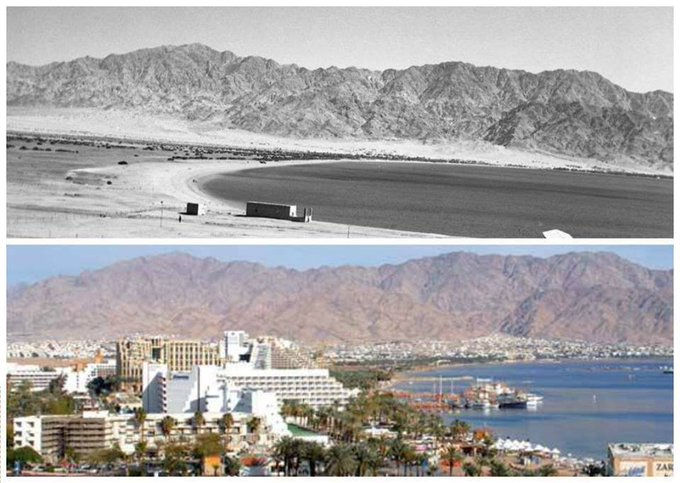
Research scientist Oren Levy, based in Eilat, has advised that the beach area pictured in front of the resort complexes once supported coral reefs, which have now disappeared. Unlike Hervey Bay, with its current height restrictions and vegetation that help shield reefs from the impacts of direct ALAN, Eilat has negligible natural protection from artificial lighting emitted by waterfront resorts.


Urbanisation Challenges to Eilat’s Coral Health, Including ALAN:
According to a Jerusalem Post article dated 17 August 2023, sea surface temperatures in the Gulf of Eilat/Aqaba have been increasing since 1988 at a rate 2.5 times higher than the world average. This warming trend, combined with underwater pollutants, extreme storm events, and disease outbreaks, has contributed to the worsening condition of the Gulf of Eilat/Aqaba ecosystem. The reefs of Eilat were once considered among the most diverse coral reefs in the world.

In 2005, research published by Rinkevich explored the reasons for the gradual degradation of Eilat’s reefs over the preceding forty years, despite extensive management efforts. In attempting to understand the causes of reef decline, Rinkevich observed:
“Continuous changes in the status of Eilat coral reef are difficult to witness, as decades of various anthropogenic activities have resulted in perpetual reef degradation.”
One outcome of Rinkevich’s research highlighted that, although Eilat’s reef was one of the most intensively studied small coral reefs worldwide, fragmented research efforts over time—including a lack of reef evaluation between 1975 and 2000—meant that Eilat was poorly positioned to establish baseline data for future assessments of reef decline and its underlying causes.
“These results should raise alarm regarding the largely unknown long-term impacts of sensory pollution on the resilience and survival of coral reefs close to coastal communities.”
Much like Hervey Bay, height restrictions along Eilat’s foreshore have recently become a point of contention, driven by pressure to increase luxury tourist accommodation. While Israel’s National Council for Planning and Construction approved an increase in maximum hotel heights on the northern coast of Eilat in early August 2023—allowing developments of up to 20 storeys (or 60 metres) instead of eight—just days later, Israel’s Environmental Protection Ministry (2022) declared that coral reef conditions in the Gulf of Eilat/Aqaba continued to deteriorate.

The Ministry further stated:
“Action must be taken to reduce the impact on the marine ecosystem from development at the popular Red Sea resort, particularly from artificial lighting.”

Research scientist Oren Levy further asserted that:
“Scientists must be involved in assessing the potential impact of urbanization on marine areas before decisions on municipal development are made.”
Commenting on research findings regarding the impacts of ALAN on coral health, scientists concluded that extensive urban development in Israel’s tourist hub of Eilat is having a devastating effect on the local marine environment.
Team leader Dr Yaeli Rosenberg stated:
“On the surface, the corals seem healthy, but when looking deeper than the naked eye, we saw the strong effect of urbanization very conclusively.”
Fellow research scientist Oren Levy added:
“The disruption of the daily and monthly cycles resulted in lower physiological performance, and reproduction cycles that disappeared in the urban corals.”
“It is imperative that sensory pollutant ALAN receives heightened attention to safeguard these essential marine environments.”
Researchers concluded that measurements of ALAN along the Eilat coastline reveal potential dangers to marine ecosystems and fundamental physiological processes within coral reef systems, reiterating that:
“It is imperative that sensory pollutant ALAN receives heightened attention to safeguard these essential marine environments.”
Finally, researchers issued the following warning to managers of coastal reef systems:
“These results should raise alarm regarding the largely unknown long-term impacts of sensory pollution on the resilience and survival of coral reefs close to coastal communities.”


Fraser Coast Regional Council Approval:
Research has already been undertaken in reefs in Eilat. Fraser Coast Regional Council has approved an 18-storey building directly in front of Hervey Bay’s fragile coral reefs, despite clear evidence of environmental risk and our report of concern delivered to them before the decision of approval. This decision contradicts established planning principles and height controls designed to protect sensitive coastal ecosystems.
The town plan limit of six storeys must be upheld. Adhering to existing height restrictions is a necessary and practical measure to minimise urban impacts—including artificial light at night (ALAN)—on Hervey Bay’s coral reefs.
Call to Action: Planning authorities must act responsibly by enforcing the current town plan, rejecting excessive building heights, and prioritising the long-term protection of Hervey Bay’s marine environment over short-term development pressures.


Frequency of Heatwaves:
Many coral reefs are expected to be lost due to mass coral bleaching events caused by global warming and the increasing frequency of heatwaves. As reefs steadily disappear around the globe, the corals of Hervey Bay are also showing signs of stress from bleaching events, particularly following the summer of 2023–2024.
Corals are animals and possess a symbiotic (mutually beneficial) relationship with algae known as zooxanthellae, which gives the coral its colour. This symbiotic partnership is fragile and increasingly threatened by elevated water temperatures, which cause coral stress, as well as by anthropogenic stressors (i.e. land clearing, agriculture, and urbanisation). When stressed, the coral host ejects its algae, causing the symbiosis to break down. Without its algae, corals appear white—a process known as bleaching. Although the coral animal remains alive at this stage, it is effectively starving. For recovery to occur, water temperatures must return to normal so the coral–algae symbiosis can be re-established. When temperatures remain elevated, the zooxanthellae do not return, resulting in permanent bleaching and eventual coral death.

Natural disturbances such as floods and extreme low tides can also be detrimental to coral health, particularly in a warming climate. Being located at the southern edge of the Great Barrier Reef lagoon, Hervey Bay is influenced by flood plumes from the Mary River, which are known to extend into the Great Barrier Reef.
Flooding deposits sediment, nutrients, and chemicals into the bay, resulting in the loss of seagrass beds, the decline of dugong populations, coral mortality, herbicide pollution of bay sediments, and increased incidence of sea turtle disease (including soft-shell syndrome).
While recovery from natural disturbances may be a normal part of coral reef dynamics, recovery is significantly impeded by urban stressors. A multitude of urban pressures interfere with coral function and health, including overharvesting of coral. These stressors are illustrated below. Local stressors associated with coral extraction also pose a major threat.

Research on corals in the Red Sea has shown that, although some corals have demonstrated resistance to warming temperatures over time, this resistance is substantially reduced by coastal pollution and artificial light at night (ALAN). Studies have found ALAN to have detrimental impacts on coral and marine ecosystems by altering their structure and ecological functioning.

Conceptual illustration of urbanization effects on coral reefs.
Environmental conditions are represented by arrows pointed from the outside towards the
coral. Biological outputs are represented by arrows pointed from the coral outwards.
Artificial Light at Night (ALAN) Impact on Entire Marine Ecosystems, Including Coral Reefs and Seagrass Meadows:
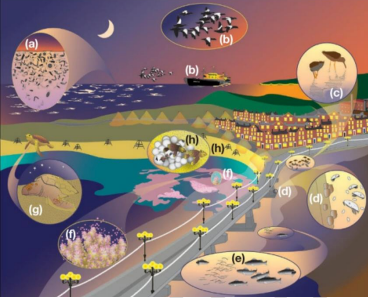
(a) Suppressions of the diel
vertical migration of zooplankton.
(b) Bird collisions with lit-up
vessels or structures. (c)
Extended activity time of foraging
shorebirds. (d) Suboptimal
settlement selection for mussel
and oyster larvae. (e) Aggregation
of fish due to light attraction
leads to local intensified
predation. (f) De-synchronization
from lunar phase for coral. (g&h)
Displacement of nesting sea
turtles and disorientation of
turtle hatchlings [Davies 2013, et
al]

a) Different marine environments not
affected by Artificial Light Pollution at Night
(ALAN), and (b) marine environments under
the potential impacts of ALAN: (i) Sandy
beaches effects on invertebrate species
day-night activity rhythms and biodiversity,
effects in the on-beach orientation of adults
and hatchling turtles, and seabirds fledgling
grounded by ALAN; (ii) Rocky intertidal
shores – influence in metabolic
activity/behavior of primary producers,
sessile and mobile animals; (iii) Shallow
water coral reefs – effects on
gametogenesis and the synchronization of
gamete release in prominent coral species,
and negative impacts over fish
reproduction, (iv) Pelagic environment –
inhibition of vertically
migrating zooplankton, and disorientation
and mortality of seabirds.
Impact of ALAN on Marine Ecosystems:
Human population growth in coastal zones is occurring more rapidly than anywhere else, with the increasing prevalence of artificial light at night (ALAN) being an inevitable consequence. Described as a “widespread, pervasive, and expanding form of sensory pollution” and a major 21st-century global change issue, ALAN has been shown to reshape natural systems—particularly shallow sandy and coral reef ecosystems that have already been exposed to multiple stressors over recent decades. These include human-induced pressures such as overfishing and chemical pollution, as well as natural stressors such as storms, disease, sedimentation, and heatwaves. As a result, coastal habitats have become some of the most vulnerable ecosystems on the planet.
“The introduction of artificial light probably represents the most drastic change human beings have made to their environment.”— Christopher Kyba, Research Scientist
Consequently, researchers have clearly stated that the effects of ALAN “should be taken into serious consideration in strategic planning for urban development.” Research also cautions against a one-size-fits-all approach to managing and mitigating light pollution, as current lux (illumination) measurements do not adequately account for differences in light sensitivity among species—particularly within marine ecosystems.
Studies indicate that ALAN disrupts the functioning of entire marine ecosystems and their organisms, including fish that rely on darkness for feeding and rest. For example, moonlight reflecting on the sea surface plays a critical role in guiding sea turtles and zooplankton during navigation and vertical migrations—processes essential for feeding and predator avoidance. These migrations also influence oceanic carbon cycling and marine food webs.

Considering that global warming and light pollution are projected to increase over the coming decades, research findings on the impacts of artificial light at night (ALAN) on marine ecosystems provide critical insights into ecosystem complexity under environmental stress and highlight the urgency of developing effective mitigation strategies.
Impact of ALAN on Hervey Bay’s Seagrasses:
Hervey Bay’s foreshore supports extensive seagrass meadows shows mapped seagrass areas, while presents drone imagery of seagrass meadows at Shelley Beach, Torquay.

ALAN is recognised as a contributing factor to the global decline of coastal seagrass meadows, with rates of disappearance comparable to those observed in mangrove forests and coral reefs.

Research published in 2023 examined seagrass exposure to ALAN and found that artificial light significantly alters the expression of genes involved in photoprotection, photosynthesis, and flowering. These effects were shown to be long-lasting, with affected plants exhibiting altered growth patterns. The study highlighted the broader ecological consequences of light pollution on entire marine ecosystems that rely on seagrass meadows for biodiversity support, including habitat provision and food for invertebrates, fish, mammals, birds, and sea turtles, as well as carbon sequestration, sediment stabilisation, and coastal erosion reduction.
Impact of ALAN on Hervey Bay’s Fringing Coral Reefs:

Global research into the impacts of ALAN on marine ecosystems—particularly nearshore systems—has identified artificial lighting as a major environmental stressor. Researchers note that:
“Many sandy beach species are known for their day/night activity rhythms controlled by natural light cycles.”
and
“Growing urbanisation near sandy shores has become a threat to coastal ecosystems, with one of the most important environmental stressors being artificial light at night (ALAN). Consequently, the ongoing expansion of ALAN near sandy beaches is expected to exert significant negative effects on marine biodiversity.”
ALAN acts as a chronic sensory disturbance, disrupting circadian rhythms across a wide range of organisms—an impact not previously accounted for in projections of global coral reef decline.
Hervey Bay’s fringing coral reefs are shallow and sandy, and in some locations are fully exposed during extreme low tides. This physical setting makes them particularly vulnerable to ALAN impacts.

Documented biological impacts of ALAN include disrupted coral spawning synchronisation, delayed or inhibited hatching in clownfish, and altered predation patterns among fish, zooplankton, and phytoplankton—organisms whose biological rhythms are entrained by natural light–dark cycles. In coastal settings, light from urban areas has been shown to elicit biological responses in animals living on the seafloor of adjacent habitats.
It is therefore evident that ALAN adds a further and significant layer of threat to already compromised reef ecosystems.
Light Pollution (ALAN) Overrides Lunar Cycles Affecting Coral Reproduction:
One of the earliest biological phenomena linked to lunar cycles is coral reproduction, where successful fertilisation relies on precise synchronisation of gamete release. Many marine organisms—including fish, echinoderms, molluscs, and crustaceans—also time annual reproductive events to lunar phases.
ALAN near urban coral reefs disrupts natural light–dark and moonlight cycles, leading to physiological, biological, and behavioural disruptions that impair feeding, reproduction, and larval settlement.
ALAN near urban coral reefs not only overrides the natural light/dark cycle and moon light but causes corals to experience physiological, biological, and behavioural disruptions affecting their ability to eat and reproduce and develop new coralettlements
Although coral sensory systems evolved over millions of years under natural lighting conditions, they have never been exposed to ALAN at evolutionary timescales, limiting their capacity for adaptation. Corals are highly photosensitive, and the coral–zooxanthellae symbiosis relies on darkness for stress recovery and repair. Both solar and lunar illumination provide critical cues for coral reproductive processes.

Research indicates that ALAN can reach 100% of the seabed in clear waters, with blue wavelengths penetrating several hundred metres. Even low illumination levels have been shown to mask environmental cues, disrupt spawning synchronisation, and alter gene expression. Studies as recent as April 2024 reaffirm that coral broadcast spawning—critical for reef recovery following bleaching events—is tightly regulated by lunar cycles and highly sensitive to artificial lighting.
Impact of ALAN on Coral Feeding:
Research published in April 2024 demonstrated that ALAN significantly disrupts coral nutrition by altering daily tentacle extension patterns essential for prey capture and nutrient acquisition. These disruptions were linked to reduced coral survival, health, and reproductive success, ultimately affecting population stability and ecosystem structure.
The alteration of coral gene expression under constant artificial light and the cumulative impacts of ALAN exposure on reef health and mortality.

Moving Forward: Protecting Hervey Bay’s Coral Reefs:
Healthy reefs can recover from natural disturbances such as floods, provided recovery processes—such as grazing by herbivorous fish—remain intact. However, cumulative human stressors including urban runoff, tourism pressure, overfishing, and ALAN can prevent recovery or lead to permanent reef degradation.
Given Hervey Bay’s increasing urban development, ongoing reef monitoring, water quality assessment, and adaptive management informed by scientific research are critical to safeguarding its unique fringing coral reefs and avoiding the ecological trajectory observed in Eilat.

In the face of Hervey Bay’s increasing urban development, identifying trends in reef degradation is critical to ensuring the longevity of its unique fringing coral reefs. Ongoing reef monitoring, water-quality testing, and the evaluation of findings—when effectively communicated back to local and state government decision-makers and reef managers—will help protect Hervey Bay’s coral reefs from future decline and may help avoid repeating the mistakes observed in Eilat.
“Scientists must be involved in assessing the potential impact of urbanization on marine areas before decisions on municipal development are made.”
Rinkevich’s 2005 research, however, demonstrates that even well-intentioned management efforts can result in unintended outcomes. His work highlighted the importance of optimally located protection zones, stating:
“It has been criticized (Jameson et al., 2002) that most marine protected areas failed to meet their management goals because too many were set up in the wrong places or with unrealistic expectations.”
Although discussed in greater detail, the location of the new Marine Park Green Zone raises concerns regarding its placement in relation to untreated stormwater runoff from the proposed development, as well as from future developments of a similar nature.
Leading Scientists on ALAN Assess the Potential Impact of High-Rise Development on Hervey Bay’s Fringing Coral Reefs and Marine Ecosystems:
Hervey Bay CoralWatch has been in discussions with leading ALAN researchers Professor Tim Smyth (Plymouth Marine Laboratory), Dr Thomas Davies (Plymouth University), and Professor Oren Levy (Bar-Ilan University), who have extensively studied the impacts of artificial light at night (ALAN) on coastal ecosystems worldwide. These researchers have personally assessed the impacts of Hervey Bay’s skyglow and have advised that, unlike the Great Barrier Reef, Hervey Bay’s coral reefs are located in shallow waters extremely close to shore, making them particularly susceptible to adverse impacts from light pollution.
The researchers have expressed significant concern for Hervey Bay’s fringing coral reefs due to their proximity to the shoreline and have confirmed that light emitted from high-rise buildings—such as the proposed Sheraton Resort—will directly penetrate the ocean surface. This direct illumination would affect all local coral reefs, ultimately compromising their ability to spawn, grow, and recover from natural stressors such as coral bleaching and flood impacts.
Accordingly, sourced from the Global Atlas of Underwater Light Pollution (GOALANN) and provided to CoralWatch by Professor Tim Smyth (Head of Science for Marine Biogeochemistry and Observations at Plymouth Marine Laboratory). This figure highlights the presence of underwater light pollution in Hervey Bay. Although Hervey Bay is currently less affected than cities such as Gladstone to the north or the Sunshine Coast to the south, it must be acknowledged that neither of these urban centres supports fringing hard coral reefs in such close proximity to the shoreline as Hervey Bay.

(Left) Global Atlas of Underwater Light Pollution (GOALANN) for Hervey Bay (based off the Falchi map (2010 – 2014) (right) Distance from proposed development to West K’gari.
It is evident that even without high-rise development along the Hervey Bay Esplanade, the fringing reefs of the Hervey Bay foreshore already receive biologically relevant artificial light to depths of approximately 8 metres. This indicates that existing ALAN levels—without additional development—are sufficient to alter marine life behaviour, function, and ecological processes. This is particularly significant given that coral reefs are sessile organisms and cannot relocate in response to environmental stress. The introduction of direct (point-source) light from high-rise developments would substantially exacerbate these impacts.
The GOALANN map also indicates that skyglow already reaches the western and north-western waters of K’gari (Fraser Island).
Current Skyglow Conditions without Development above the Tree Line at Torquay

(a) current direct (point source) light emitting into water (Taken Torquay beach - facing west
toward Pt Vernon)
(b) current direct light emitting into from beach (taken Torquay Beach - facing east)
(c) current light emitting from Torquay (with no visible development along the
foreshore above treeline (taken from Point Vernon)
In reference to the GOALANN map for Hervey Bay Professor Tim Smyth stated:
“Quite close to shore, you are getting biologically relevant light down to about 8 metres, caused by skyglow—mainly from the town—and this extends 10 to 15 kilometres offshore.” explained Pro. Tim Smyth.
The original Sea Turtle and Shorebird Impact Assessment (which was the assessment upon which the development was approved) states:
“Artificial light from the proposed development has the potential to cause impacts both directly (point source) and from its contribution to skyglow.”
Source: Page 15 of the Sea Turtle and Shorebird Impact Assessment (September 2023), page 493 of the Development Application (MCU23/0090), located on the Fraser Coast Regional Council’s Planning and Development Portal
“Artificial light from the proposed development has the potential to cause impacts both directly (point source) and from its contribution to skyglow.”explained Pro. Tim Smyth
skyglow currently emanating from Torquay Beach, while relatively localised, is likely to reach the Torquay Beach and shoreline.
Direct (Point-Source) Light from the Proposed Sheraton Resort and Other Development above the Tree Line:
In an interview conducted in April 2024 between Hervey Bay CoralWatch and Professor Tim Smyth, Professor Smyth commented specifically on the impacts of direct, ongoing light emitted from the proposed 21-storey development on Hervey Bay’s fringing coral reefs:
“Once you start building upwards, another component is added into the mix—direct light that travels straight from the light source into the ocean, rather than being reflected off the sky as with skyglow. You still get the skyglow effect, but you also get light shining directly into the water.In very close proximity to the shore—perhaps within about half a kilometre offshore—you will greatly increase the amount of direct light entering the water. How much light enters then depends on how high the building is.”explained Pro. Tim Smyth.
Why Hervey Bay’s Coral Reefs Are at Greater Risk than Great Barrier Reef Corals from Light Pollution:

When comparing the impacts of ALAN on Hervey Bay corals versus the Great Barrier Reef, Professor Smyth stated:
“The global atlas clearly shows that the Great Barrier Reef is sufficiently far offshore to avoid most impacts from artificial light at night caused by urban skyglow. While individual vessels may have some impact, the reef is far enough from settlements and at sufficient depth to largely escape ALAN pollution.In contrast, Hervey Bay’s corals are extremely close to land and very shallow. This means they are exposed to skyglow that can extend 10 to 20 kilometres offshore, and because the corals are so close to the surface, biologically relevant light reaches them year-round. This impact is exacerbated in clearer water, where light penetration is even greater. Based on modelling, ALAN will consistently impact these corals.”explained Pro. Tim Smyth.
Conclusion:
We are not anti-development; we want to see Hervey Bay move forward with progress. However, in Hervey Bay, it often feels as though standing up for an issue is automatically perceived as being “anti-something,” when in fact it is about standing up for animals that cannot speak for themselves and ensuring the developer has correctly completed their impact assessment.
This building is the first of its kind, yet the assessment does not even mention coral reefs, despite coral reefs being included in the National Light Pollution Guidelines for Wildlife. This is also the first coral reef in Australia where a building is being placed directly in front of a reef which is a habitat for all marine species that rely on it. This development sets a precedent for what is to come for Hervey Bay.
Fraser Coast Regional Council should have conducted its own independent impact assessment, especially for a building of this height, to ensure there is no damage to marine life or wildlife adjacent to the development. Doing so would help ensure the longevity of a healthy, thriving ecosystem for many generations to come.
Unfortunately, the Hervey Bay community has already had to contribute $100,000 to challenge this application and ensure the developer is held accountable. This fight has been ongoing for over a year, and significant funds are still required to cover legal costs. It is sad to see that only now is the wider community becoming aware of the reefs, or beginning to learn and understand the impacts that artificial light has on the marine ecosystem.
Fight the height of a 18-storey building directly in front of the Torquay Coral Reef and protect Hervey Bay's Coral reefs! Donate today! click the link below: https://chuffed.org/project/support-the-appeal-against-18-storey-hervey-bay-hotel

Thank you for reading our sixth blog! Subscribe, like and comment to stay updated and catch our future posts!! This blog was written by Breannah and Sharon Mitchell credited the scientists mentioned in this article.


Comments