Hervey Bay Scollops Fun Facts
- Breannah Mitchell
- Feb 4
- 6 min read


Hervey Bay scallops are world-renowned for their exceptionally sweet, tender, buttery texture, often considered the best in Australia! When we sit down to enjoy them at a restaurant, we rarely think about just how incredible these little molluscs truly are — or how many other sea creatures rely on them as food.
We often focus on the large marine animals, but just like coral reefs, small marine species are just as fascinating and vital to ocean health. Scallops may be small, but they play a powerful role in keeping our marine ecosystems balanced and healthy.
In this blog, you’ll explore surprising and lesser-known facts about scallops and discover just how important they are to Hervey Bay’s marine ecosystem.


All About Scallops
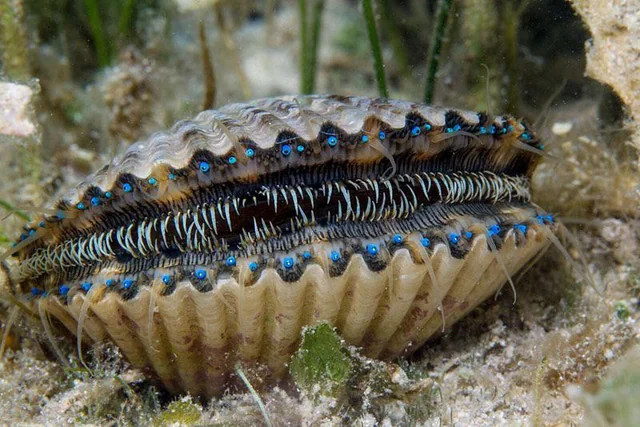
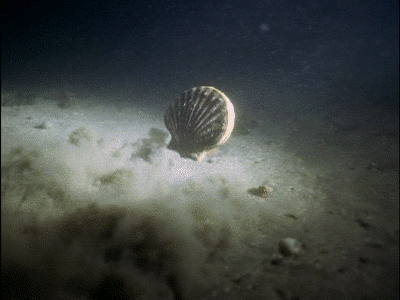
Scallops are marine shellfish (bivalve molluscs) related to oysters, clams, and mussels. They have fan-shaped shells and live on the ocean floor. Scallops have up to 200 small blue eyes around the edge of their shell, which help them detect movement and light. They can swim by clapping their shells together to escape predators such as starfish. Scallops do not have a brain but instead have a simple nervous system.
Scallops are fast-growing but short-lived, with lifespans and sizes that vary between species. Some species can live for up to 20 years, but most sea scallops that are harvested have a lifespan of only 5–10 years. During this time, their shells can grow rapidly, reaching approximately 15-22 cm within the first five years of life.

Ylistrum balloti (Ballot’s saucer scallop), the scallop species found in Hervey Bay, generally live for 2–3 years and have a maximum lifespan of up to 4 years. They reach sexual maturity at around 11–18 months. Ballot’s saucer scallops can grow to a shell height of up to 140 mm (14 cm), but are more commonly found at 8–9 cm.

Starfish Eat Scallops
Starfish are one of the main predators of scallops. A starfish attaches itself to a scallop and pulls the shell open using steady pressure until the scallop’s muscles become tired and the shell opens slightly. The starfish then pushes its stomach out of its body and into the scallop’s shell, where it digests the scallop’s nutrients. Other predators include certain crabs, lobsters, and large snails.

Relationships with Other Organisms
Some scallops have symbiotic relationships with organisms such as sponges and barnacles that grow on their shells. Sponges, in particular, can act as a protective shield, making it harder for starfish to feed on the scallop.

Importance to the Ecosystem
Scallops are highly beneficial to the marine ecosystem because they act as natural biofilters, cleaning the water by consuming phytoplankton. Phytoplankton are microscopic, plant-like organisms (mostly algae and bacteria) that drift in the sunlit layers of oceans and freshwater bodies.
By feeding on phytoplankton, scallops help prevent excessive nutrient build-up, which improves overall water quality. As filter feeders, scallops pull water through their gills to remove nutrients and bacteria, helping keep coastal habitats clean.

A scallop’s diet mainly consists of phytoplankton but they also eat zooplankton. As bottom-dwelling filter feeders, scallops consume tiny drifting animals such as krill and copepods. They trap these organisms in mucus on their gills as water passes through their shells, allowing them to collect food efficiently.
A fun way to remember this is from SpongeBob SquarePants — Plankton is a zooplankton, which is similar to the tiny organisms scallops eat!

Ecosystem Health Indicators
Scallops are important indicators of ecosystem health. Because they require clean, salty water and healthy seagrass habitats, their presence shows that Hervey bay or the ocean environment is in good condition.
Role in the Food Chain
Scallops are a crucial food source for many marine animals, including cod, wolffish, crabs, lobsters, and sea turtles Loggerheads. Scallop shells also act as nurseries for small marine creatures, providing shelter and protection.

Natural Biofilters are Important
Living in Hervey Bay my whole life, I have noticed significant changes in our once-thriving marine mecca. I remember fishing from the beach as a little girl, proudly pulling in my first winter whiting, yet these days they are rarely seen off the beach.
After snorkelling, I would sometimes go for an oyster foraging session on the rocks, but now it is difficult to find many healthy oysters. (I will explain the imporatance of oysters in futrue blog and how they play a vitial role and how they decline)
These changes made me question how our marine ecosystem really works and what might be causing these declines.
When I learned that Hervey Bay scallops were overfished and the fishery was closed in 2021, it motivated me to investigate not only what happened, but also how important scallops are to water quality. Through this research, I discovered how fascinating these small bivalve scallops are and how vital they are to the health of our region.
Each marine species plays an essential role in maintaining balance within the ecosystem. Overfishing can disrupt this balance, as shellfish such as scallops, oysters, and pipis plus many more speices, are crucial for filtering water and removing excess nutrients from urban runoff. Without these natural biofilters, the health of our oceans — and ultimately Hervey Bay itself — begins to decline.
Not so fun facts - the hard truth of overfishing...
History of Scallop Fishing In Australia
WWF Australia Reporting Low Stocks
2010–2016
Scallop abundance continued to decline despite management efforts. Independent assessments suggested stock biomass was extremely low, with WWF Australia reporting stocks as low as about 6% of original levels by 2016 — a dramatic collapse likely due to overfishing and insufficient management responses.
2017
Rotational SRAs (including areas off Hervey Bay and Yeppoon) were permanently closed due to persistent depletion.
Key Patterns Over Time
1970s–1990s: Commercial fishing grows; early signs of decline appear.
Late 1990s: First official identification of overfishing in Queensland; replenishment areas trialed.
2000s: Rotational closures implemented but stock continues to decline.
2010–2016: Major crashes in abundance; biomass as low as ~6 %.
2017: Permanent closures of certain scallop fishing areas.
2021: Major statewide inshore scallop fishing ban.
2025–2026: Early signs of recovery in northern regions; structured rebuilding plans underway
Townsville to Hervey Bay
Fishing for scallops in inshore waters from Townsville to Hervey Bay was banned in September 2021 due to serious overfishing concerns, which had depleted approximately 88 per cent of the scallop stock.
Population surveys conducted in 2016 indicated that scallop numbers were declining at alarming rates, with estimates showing that only 12 per cent of the original stock remained. This significant decline prompted the Queensland State Government to take immediate management action to prevent further collapse of the fishery.
By January 2026, population assessments showed signs of recovery. Scallop stocks in northern waters had reached the 20 per cent biomass benchmark, allowing parts of the northern fishery to reopen. However, southern waters, including areas closer to Hervey Bay, remain closed as stocks there have not yet recovered to sustainable levels.
Scallop trawlers and dredges operate using heavy gear dragged across the seafloor, which can catch a wide range of non-target species in addition to scallops. This occurs because the nets and dredges are designed to disturb the seabed in order to dislodge scallops, as scallops are bottom-dwelling organisms.
Thank you for reading our eighth blog! Subscribe, like and comment to stay updated and catch our future posts!!


Comments